Interior Design in NYC: What to Expect
The question everyone wants answered
If you're thinking about hiring an interior designer in New York City, the first thing you want to know — before anything else — is what it's going to cost.
It's a fair question, and one that most designers are surprisingly evasive about online. So let me give you a straightforward answer.

Mazen Eshak, Founder of Mazen Designs
I've been designing residential and commercial spaces across New York City for years and worked with hundreds of clients — from first-time homeowners renovating a one-bedroom in Brooklyn to developers transforming entire floors in Midtown.
Here's what interior design actually costs in NYC in 2026.
The three most common pricing structures
Interior designers in New York typically work under one of three models. Understanding which one applies to your project will help you budget accurately from the start.
Hourly rate. Most designers charge between $150 and $500 per hour in NYC, depending on experience, reputation, and project complexity. This model works well for smaller projects, consultations, or clients who want design guidance without full-service management.
Flat fee. For defined projects with clear scope — a full apartment renovation, a single room redesign, or a commercial office fit-out — many designers (including my studio) prefer a flat project fee. This gives both sides clarity and removes the anxiety of watching the clock. Flat fees in NYC typically range from $5,000 for a focused single-room project to $75,000+ for a full luxury renovation.
Percentage of project cost. Some designers charge 10–20% of the total construction and furnishing budget. On a $500,000 renovation, that's $50,000–$100,000 in design fees alone. This model is common in high-end residential and large commercial projects.
The right model depends on your project. At Mazen Designs, I'm transparent about pricing from our first conversation — no surprises, no hidden markups.
What actually drives the cost up (or down)
No two projects cost the same, and in New York City, a lot of variables come into play:
• Project size and complexity. A 400 sq ft studio in the East Village is a very different undertaking from a 3,000 sq ft penthouse in Tribeca.
• Level of service. A full-service designer handles everything: concept development, sourcing, vendor management, site visits, installation. A consultant gives you direction and lets you execute. Full service costs more — but it also saves you time, stress, and expensive mistakes.
• Furnishing and procurement budget. If your designer is sourcing custom furniture, bespoke fixtures, or luxury materials, those procurement costs sit on top of design fees.
• Renovation involvement. If your project involves construction — moving walls, upgrading electrical, redoing kitchens or bathrooms — expect design fees to increase to reflect the coordination required.
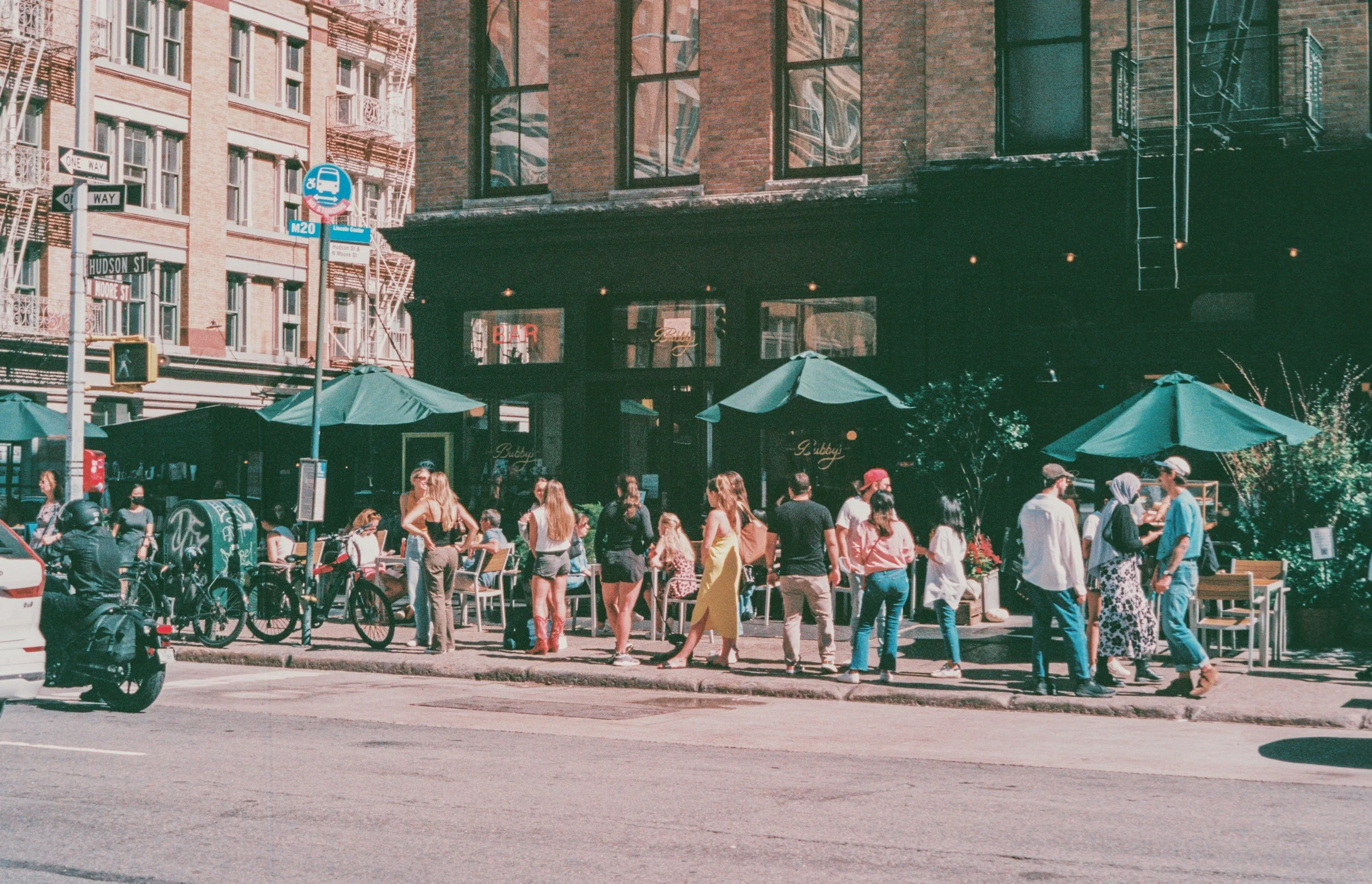
Big City Ambiguity
No two projects cost the same, and in New York City, a lot of variables come into play.
• NYC-specific costs. Permits, building management approvals, union labor requirements, and freight elevator scheduling all add layers that simply don't exist in other markets.
What does a typical project cost in NYC in 2026?
To give you a useful benchmark, here's how I think about project tiers in New York today:
• Single room redesign (no construction): $5,000 – $15,000 in design fees, plus furnishings
• Full apartment renovation (1–2 bedrooms): $15,000 – $40,000 in design fees
• Luxury full-home or large apartment renovation: $40,000 – $100,000+ in design fees
• Commercial office space (1,000–5,000 sq ft): $20,000 – $80,000+ in design fees
• Design consultation only (1–3 hours): $250 – $750
These are design fee ranges only. Total project budgets — including furniture, materials, and any construction — will be significantly higher. A full luxury renovation in Manhattan commonly runs $100,000 to several million dollars all-in.
Is it worth it?
This is the question I find most interesting, because the answer depends entirely on what you're trying to achieve.
For homeowners, a well-designed space isn't just more beautiful to live in — itholds and often adds value to your property. In the NYC luxury market, buyers and renters respond viscerally to quality design. A thoughtfully renovated apartment sells faster and for more.
For business owners, the ROI case is arguably even clearer. The right office design affects how your team feels coming to work every day, how clients perceive you when they walk through the door, and whether your space reflects the caliber of what you actually do. I've seen offices go from forgettable to genuinely impressive — and watched it change how a company presents itself entirely.
The cost of bad design — or no design — is usually higher than the cost of getting it right.
How to approach your budget conversation with a designer
A few practical tips before you reach out to anyone:
• Be honest about your budget from the start. A good designer will work within it or tell you candidly if your expectations don't match your budget. Either way, you save time.
• Ask specifically how they charge. Hourly, flat fee, percentage — and what's included. There should be no ambiguity.
• Ask what's not included. Procurement markups, travel, contractor coordination fees — understand the full picture before you sign anything.
• Get a written proposal. Always.
Ready to talk about your project?
If you're thinking about a residential renovation, a new apartment design, or transforming your NYC office space, I'd love to hear about it. I offer initial consultations for new clients, and I'll give you a clear, honest picture of what your project might cost before you make any commitments.
Browse my portfolio at mazendesigns.com or get in touch directly at hello@mazendesigns.com. New York is full of extraordinary spaces waiting to be designed — let's talk about yours.